
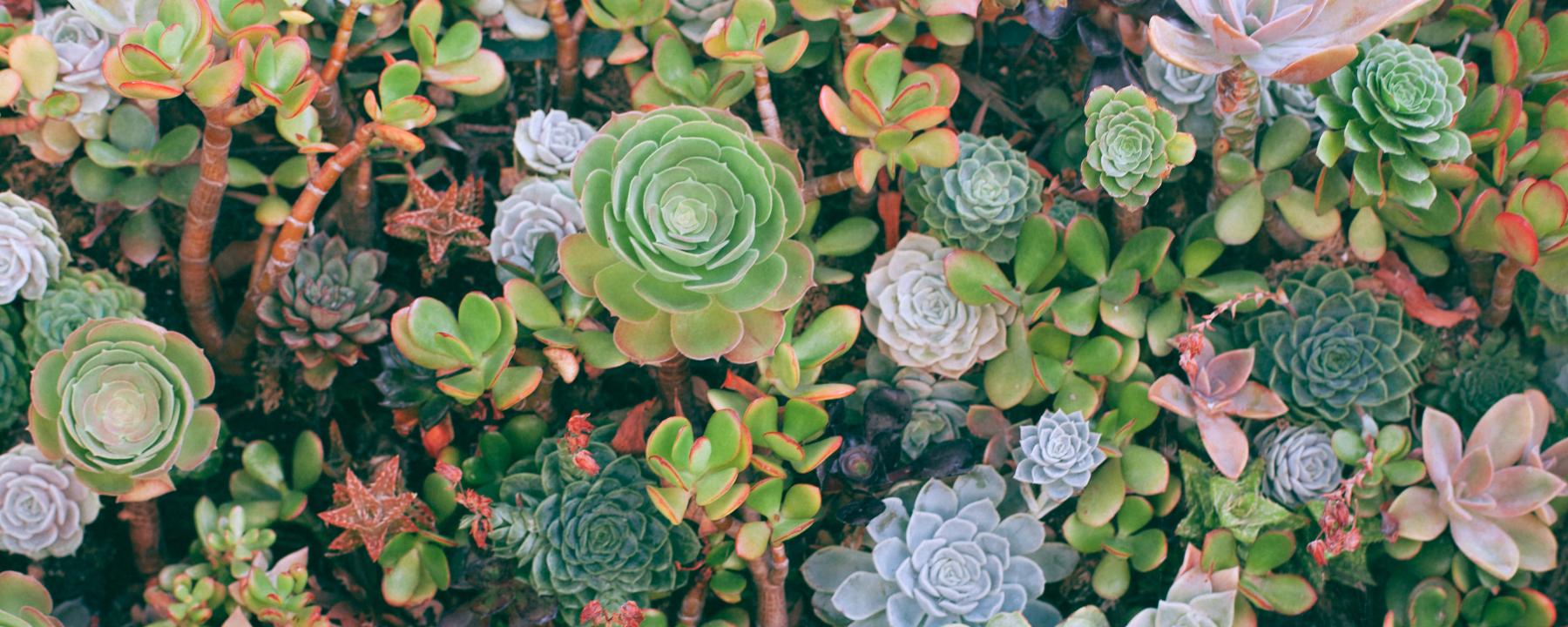
Succulents are great beginner plants! They come in so many stunning shapes and sizes. They don’t require a lot of care, and won’t burn if you forgot you moved them outside for the day. However, to grow healthy big succulents a few key steps will help you get there with ease:
1. Light
Commonly native to desert areas of America and Africa, these water-storing plants love bright, indirect light. They love between 6-7 hours of sunlight per day. If accidentally left out in the full sun, they can begin to take on a red tone over time, which is the plant’s natural sunscreen pigment to protect it from damage.
When succulents don’t receive adequate light needs, they can begin stretching, with thin stems and a “leggy” appearance.

2. Soil
Succulents do not like being too wet or sitting in water. Too much water and soggy soils can lead to root rot. Thus, when purchasing a new succulent or repotting, ensure they are planted in well-draining soil specifically designed for succulents or cacti. These potting mixes often have materials that aid soil drainage, such as sand, pumice, perlite, or zeolite.

3. Watering
As mentioned previously, succulents hate being too wet, thus water sparingly. It is important to allow the soil to dry out between waterings. This usually means watering 1-2 times per week in the warmer months, and even less so in Winter.
Overwatering is one of the most common issues associated with growing succulents.
4. Container
Succulents can look great in hanging pots (perfect for Donkey Tail, Burrito, String of Pearls, and other trailing succulents), loaded into troughs, terrariums, and on their own in a single pot. When deciding on the right pot, it is important to look for one that has plentiful drainage holes to ensure excess water can escape.
If you would like a pot that doesn’t leak all over your home furnishings, put the well-drained plastic pot into a ceramic pot with pebbles at the bottom, and ensure when you water that you tip out any excess water in the ceramic one. This will ensure the succulent is not sitting in water, keeping the soil too wet. A similar idea works well in a tray or dish.
Alternatively, for more experienced succulent growers, ensure the soil is completely dry before watering, and only water until the soil is moist, not wet or soggy.

5. Temperature
Succulents love warm and dry conditions, thus they do well in environments between 15-27°C (60-80°F). In the Wintertime growth may slow down, especially once temperatures drop below 14°C. You can protect them from temperature fluctuation by bringing succulents indoors (if possible) and placing them in the warmest, brightest window of your home to better control growing temperatures.
6. Fertilising
Succulents don’t need a lot of tending to, however, they do enjoy a good feed of diluted, balanced fertilizer during the growing season (Spring and Summer). This can most commonly be found at your local gardening, hardware, or produce store.
7. Pruning
As scary as it may sometimes seem, succulents do well from regular trimming of dead or damaged leaves to encourage healthy new growth. However, make sure you do some research on your particular succulent variety before cutting “leggy” stems, as where you cut can make an impact on the health of the plant in some varieties.
8. Pests
Check for pests like mealybugs and spider mites regularly and treat them promptly if you find any. Some signs of pests can include, white spots on leaves (especially in String of Pearls), dying leaves, and poor growth.
Neem oil is often a great pest treatment product for succulents, just remember to apply when the plant is not in full sun, heat, or water stressed. Preferably in the late afternoon, to prevent scorching.

9. Repotting
Repot your succulent when the plant outgrows its container, usually when you see plentiful roots sticking out the bottom of the pot. You can also repot when the soil becomes depleted of nutrients, usually resulting in the soil looking dull, and white-toned, or after 12-18 months when most slow-release granular fertilizers in potting mixes begin losing effect.
Remember, different types of succulents may have specific care requirements, so it’s a good idea to research the specific succulent species you have for tailored care advice.
Leave a Reply